Key Takeaways
- Continental is transforming tyre manufacturing through sustainable innovation, using recycled materials, bio-based resources, and advanced engineering to reduce environmental impact.
- Technologies like rice husk silica and ContiRe.Tex enable high performance without compromise, maintaining grip, durability, and efficiency while lowering carbon footprint.
- The Vision 2050 roadmap aims for fully sustainable tyres, positioning Continental as a leader in next-generation tyre technology for both traditional and electric vehicles.
Natural rubber, synthetic polymers, steel, and carbon black – this is the recipe for premium car tyres that we’ve known for decades. However, as the automotive industry shifts towards a greener future, the tyres on our cars are also undergoing a revolution.
Continental Tyres
If you’ve been searching for a Continental tyre shop, you’re not only looking for a replacement part; you’re likely looking for the cutting edge of German engineering and the best example for that is the Continental UltraContact series.
While drivers in Malaysia are currently well-served by high-performance models like the UltraContact UC7 and the SUV-focused UltraContact UX7, Continental is already presenting its most advanced sustainable technologies in other markets. A prime example is the UltraContact NXT. Although it is currently sold primarily in the European market, it serves as a high-tech rolling laboratory.
The UltraConnect NXT represents a massive example of Continental’s Vision 2050, the company’s commitment to using 100% sustainable materials in all its tyre products by 2050. But how does Continental turn agricultural waste and plastic into a high-performance safety component? The answer lies in a combination of renewable resources, recycled materials and refusing to compromise on the AAA EU tyre label ratings.
Rice Husk Ash
The use of silicate derived from rice husk ash is one of the most fascinating R&D breakthroughs. Traditionally, silica’s role in tyre compounds is improving grip, especially in wet conditions, while reducing rolling resistance. However, the production of conventional silica is energy-intensive.
Rice husks are an agricultural byproduct that are often discarded or burned. But Continental has found a way to lower its manufacturing carbon footprint by sourcing silica from that exact byproduct. This bio-silica has an identical performance to its industrial counterpart, while also ensuring benefits from waste-reduction technology.
ContiRe.Tex Technology
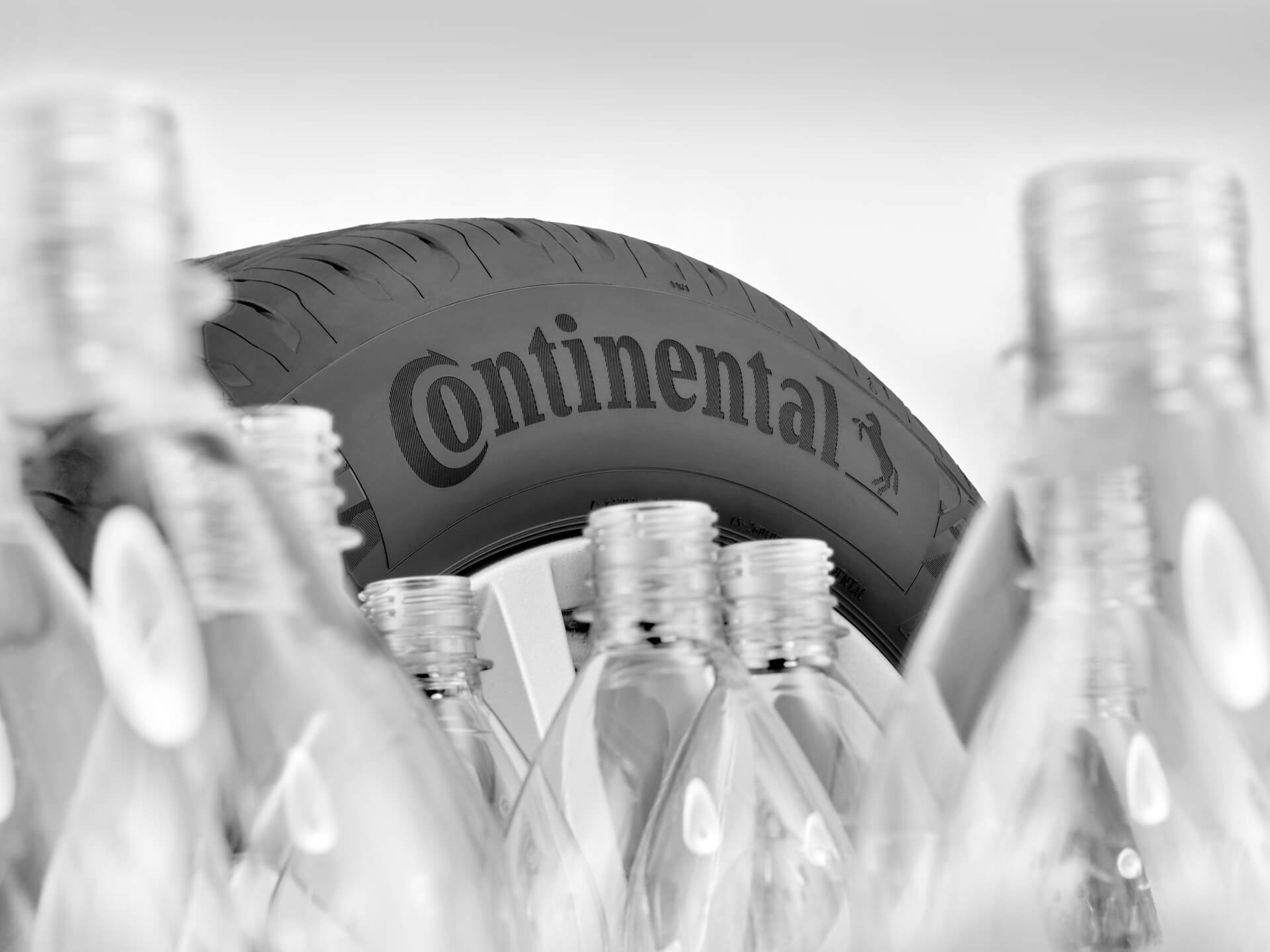
Perhaps one of the most sustainable innovations from Continental is their ContiRe.Tex technology, which means that some tyres now feature polyester yarn made from recycled PET plastic bottles that would otherwise end up in the ocean or landfills. Specifically, Continental uses between 9 and 15 bottles for a single tyre, depending on its size.
Continental developed a specialised recycling process which avoids the traditional chemical recycling routine, a process that consumes a lot of energy. Instead, it mechanically processes the bottles to create a high-performance polyester yarn that is used in the tyre’s carcass – an essential structural skeleton of the tyre. The recycled material is robust enough to withstand high speeds and heavy loads, proving that recycled does not necessarily mean lower quality.
Vision 2050
The Vision 2050 roadmap aims for a fully circular economy and in order to achieve this, Continental is looking beyond plastic bottles. It is scaling several ground-breaking technologies.
Taraxagum or dandelion rubber is one of them. Continental has successfully manufactured tyres using natural rubber extracted from the roots of specially bred Russian dandelions, allowing rubber to be grown locally near factories. This significantly reduces carbon emissions associated with transporting rubber from tropical regions.
Continental is also working on recovering carbon black fron end-of-life tyres using pyrolysis, closing the loop on tyre disposal. They are also replacing petroleum-based resins with those derived from residual materials from the paper and wood industries.
Not Compromising on Performance
One of the most common concerns among all of us is whether a green tyre can perform as well as a traditional one. The R&D behind these sustainable models has already yielded the first series-production tyres to achieve a Triple A rating on the EU tyre label across critical areas: Rolling Resistance, which means higher fuel efficiency for petrol cars and more range for electric vehicles, Wet Grip, which ensures the shortest possible braking distances in the rain and Exterior Noise, which ensures a quieter, more comfortable cabin experience.
The Triple A status is crucial, especially for electric vehicle owners looking for a Continental tyre shop. EVs are heavier and they produce instant torque, which means immense stress on tyres.
Your Car is Rolling into the Future
While specific models like the UltraContact NXT are tailored for European regulations and road conditions, they serve as a great example for the global market. The technology used to turn rice husks into grip and plastic bottles into structure is rapidly becoming the global benchmark.
The next time you visit a Continental tyre shop for a set of UltraContact UC7 or UltraContact UX7s, remember that you are benefiting from a global R&D ecosystem. The sustainable innovations that are being perfected in Europe today are the building blocks for the tyres that will be on global roads tomorrow.
The future isn’t just under the hood. It’s in the very rubber meeting the road.