Key Takeaways
- The 24 Hours of Le Mans is the world’s oldest endurance race, testing not just speed but vehicle durability, engineering, and driver resilience.
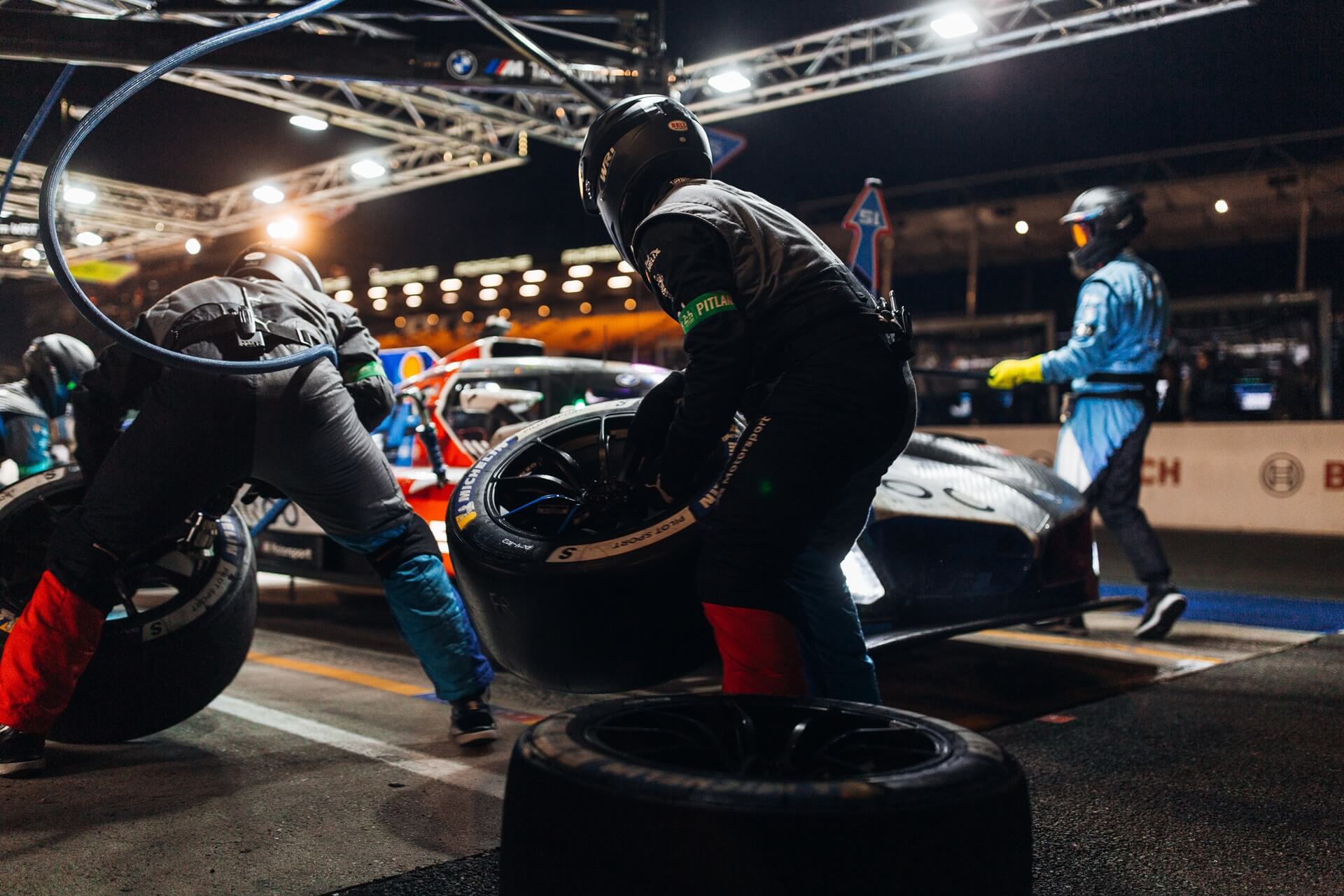
- Tyres are the most critical component, balancing grip, heat resistance, and durability under extreme conditions over long distances.
- Michelin plays a leading role in tyre innovation at Le Mans, developing advanced endurance tyres with high-performance compounds and sustainable materials that influence modern road and semi-slick tyre technology.
A monument to human ambition and mechanical resilience, the 24 Hours of Le Mans is more than a race. First held in 1923 near the French town of Le Mans, it stands as the world’s oldest active endurance race in motorsport. Compared to Formula 1, which celebrates raw, sprint-style speed, Le Mans is a 3,000-mile marathon that pushes every part of a vehicle to its breaking point.
However, the engine or the aerodynamics are not the most critical components of these vehicles; it’s the tyres – a component that connects the car to the asphalt.
A Century of Speed
Fostering innovation and reliability represents the origins in which Le Mans was rooted. Back in the early 1920s, most races were just short sprints, which is why the Automobile Club de l’Ouest (ACO) wanted to create a format that motivated manufacturers to build cars that were not only fast but also durable.
Andre Lagache and Rene Leonared won the inaugural race in 1923 after covering around 2,200 kilometres. In comparison, modern winners frequently exceed 5,300 kilometres in the same 24-hour window.
Throughout history, the race has evolved through various iconic eras: the “Bentley Boys” dominance in the late 1920s, the legendary Ford vs. Ferrari rivalry of the 1960s, and the high-tech hybrids of the 2020s. Going through the century of evolution, the Circuit de la Sarthe has remained a unique beast – a mix of dedicated racing track and closed public roads, including the terrifyingly fast Mulsanne Straight. These various surfaces have made Le Mans the ultimate real-world laboratory for tyre development.
Tyres at the Limit
Engineering is a game of managing contradictions at Le Mans. A tyre must be able to provide enough grip at around 240 km/h while staying durable to survive “triple stinging” – driving for three consecutive fuel loads without a change.
One of the biggest challenges is the operating window, meaning that if a tyre is too cold the rubber will remain hard and provide no traction. On the other hand, if it gets too hot, the chemical bonds start to break down and the tyre will “grease up,” losing its bite. This is basically how semi-slick tyres were created, which plenty of racing enthusiasts use today. They are capable of handling extreme temperature fluctuations, which is exactly what happens when you drive at high speeds.
When it comes to the engineering pits, the focus is on the “contact patch.” To optimise this, slick/racing tyres have no grooves. However, Le Mans often sees unpredictable weather conditions, which is why engineers have developed compounds that offer slick-like grip but can still function when the track is damp. The same goes for semi-slick tyres. By reducing the number of grooves and using a stiffer carcass, tyre manufacturers give drivers the lateral stability of a Le Mans prototype.
Michelin Pilot Sport Endurance Range
Michelin is one of the most familiar names associated with Le Mans. As of 2026, Michelin continues to push the boundaries of what rubber can do, especially with their latest Pilot Sport Endurance tyre range designed for the Hypercar class.
Sustainable high-performance is one of the latest engineering features from Michelin. The tyres used in the 2024 and 2026 Le Mans seasons are made of up to 50% sustainable materials, including recycled carbon black and bio-resins. These tyres also feature “Micro-Velvet” technology on the sidewalls and tread edges, helping the tyre generate heat faster in the absence of tyre warmers. This multi-compound technology has migrated directly from the Le Mans tyres into the semi-slick tyres that we can find on the shelves of our local tyre shops.
Semi-slick tyres use the same structural rigidity developed for the Porsche Cures at Le Mans to prevent “tyre roll” during heavy cornering on a track day or mountain drive. They provide several benefits such as improved heat cycles, high silica compounds and minimal void ratio.
The Race that Never Ends
The legacy of Le Mans is always there, and it doesn’t stop after the checkered flag falls every June after 24 hours of competition. It is where legends like Jacky Ickx and Tom Kristensen haunt the Mulsanne Straight and where engineers return year after year to stake their reputation on a full day of racing.
It’s the event that has survived a century of automotive evolution because it requires more than just a fast car; it demands a perfect harmony between mechanical grit and human endurance.