Key Takeaways
- Tyre size is a standardised code printed on the sidewall of every tyre. Once you know how to read it, finding the right fit is straightforward.
- The three main numbers represent width, aspect ratio and rim diameter. Each one affects how your tyre fits and performs on Malaysian roads.
- 175/65R14, 185/55R15 and 205/55R16 are among the most common tyre sizes fitted to popular Malaysian cars such as the Perodua Myvi, Proton Iriz, Honda City, Toyota Vios and Perodua Ativa.
- Always match your replacement tyre to your vehicle manufacturer’s specification to maintain safety, fuel efficiency and legal compliance.
Have you ever stood in a tyre shop, looked at the sidewall of your car tyre, and wondered what all those numbers and letters actually mean?
You are not alone. For many Malaysian drivers, a tyre size code such as 175/65R14 or 205/55R16 can look more like a serial number than useful information. In reality, understanding your tyre size is one of the simplest and most important things you can do as a car owner. It helps you buy the right tyre, avoid costly mistakes and make sure your car stays safe on the road.
In this guide, we explain exactly how to read your tyre size, compare three of the most common sizes found on Malaysian cars, and help you find the right tyres for your car.
What Is a Tyre Size?
A tyre size is a standardised code that describes the physical dimensions and performance rating of a tyre. Every tyre sold in Malaysia, regardless of brand, follows the same core format. This makes it easier to compare tyres and replace them correctly.
The code typically looks something like this:
185/55R15 82H
Each part of this code tells you something specific about the tyre. Once you understand what each number and letter means, you will no longer need to guess when replacing your tyres.
Where to Find Your Car Tyre Size
You can usually find your tyre size in three reliable places.
1. Check the Tyre Sidewall
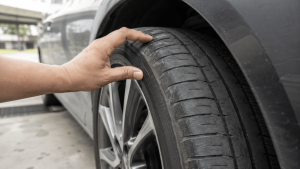
Look at the outer edge of your current tyre. The tyre size is printed in large, raised lettering on the sidewall, usually near the brand and model name.
2. Check the Driver’s Door Frame Sticker
Open the driver’s side door and look for a label on the door pillar. This usually shows the manufacturer-recommended tyre size and tyre pressure for your vehicle.
3. Check Your Vehicle Owner’s Manual
Your owner’s manual will normally list the approved tyre sizes for your specific model and variant under the tyre specification section.
You can also search tyres by size online to compare suitable options across different brands.
How to Read a Tyre Size Code
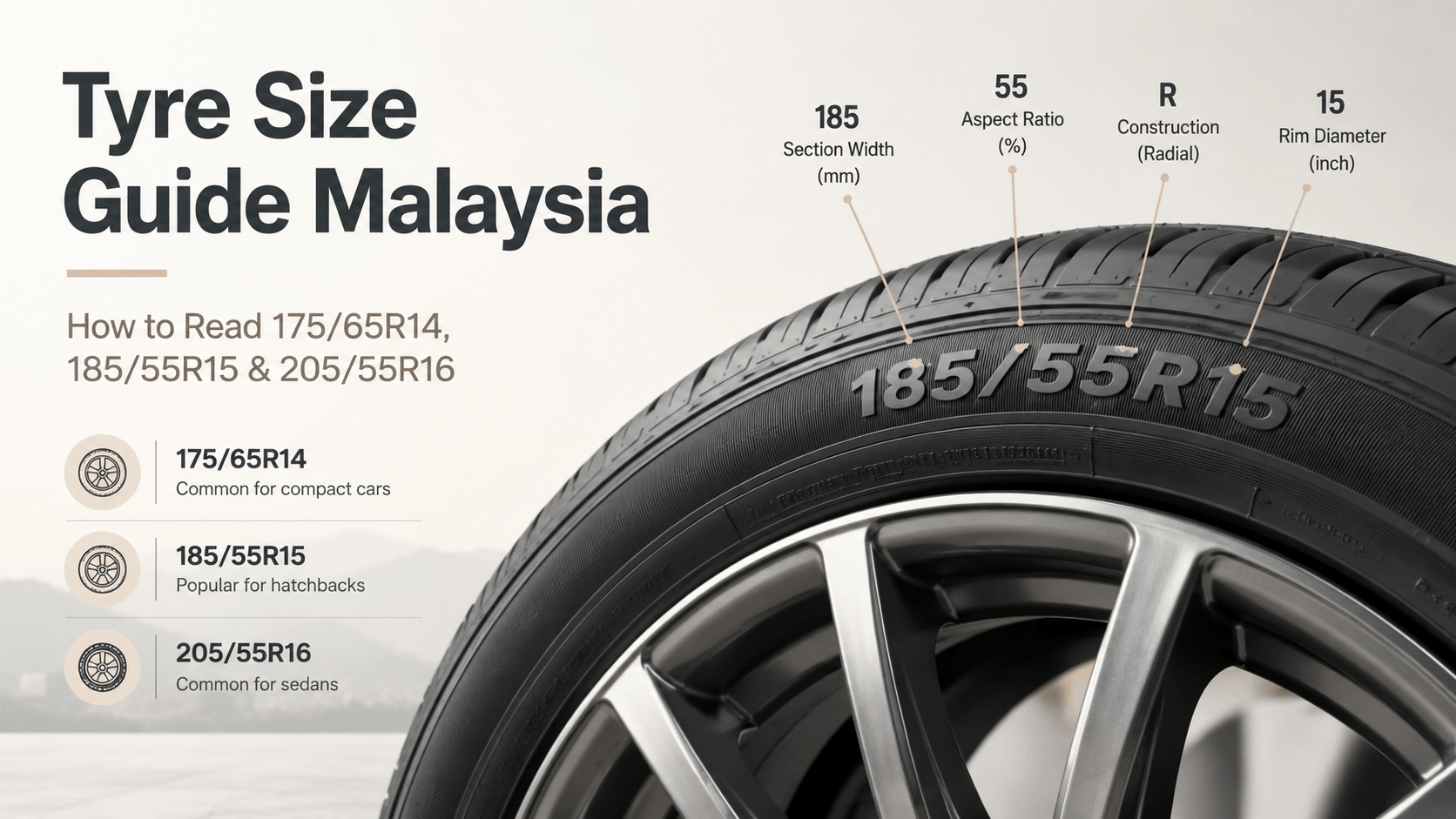
Let us use 185/55R15 82H as our working example.
Example: What Does 185/55R15 82H Mean?
In this example, 185 refers to tyre width, 55 refers to the aspect ratio, R means radial construction, 15 is the rim diameter in inches, 82 is the load index and H is the speed rating.
Tyre Width: What the First Number Means
The first number is the width of the tyre in millimetres, measured from one sidewall to the other at the widest point. In the example 185/55R15, the tyre is 185 mm wide.
Common tyre widths for Malaysian passenger cars range from around 155 mm to 225 mm. A wider tyre generally offers more road contact and grip, but it may also affect fuel consumption and steering feel depending on the vehicle.
Aspect Ratio: What the Second Number Means
The second number is the aspect ratio, also known as the tyre profile. This is expressed as a percentage of the tyre width.
In 185/55R15, the number 55 means the sidewall height is 55% of 185 mm, which is approximately 101.75 mm.
A lower aspect ratio, such as 45 or 50, means a shorter sidewall and a sportier feel. A higher aspect ratio, such as 65 or 70, means a taller sidewall, which usually gives a softer ride and is common on city cars and economy models.
For everyday Malaysian driving, including school runs, highway commutes and balik kampung trips, a mid-range profile between 55 and 65 often provides a practical balance between comfort and handling.
Construction Type: What “R” Means
The letter R stands for radial, which refers to how the internal layers of the tyre are constructed. Radial tyres are the standard construction for virtually all modern passenger car tyres.
You may occasionally see D for diagonal or B for belted construction, but these are uncommon for regular passenger vehicles in Malaysia.
Rim Diameter: Why the Inch Size Matters
The next number indicates the diameter of the wheel rim in inches that the tyre is designed to fit. In 185/55R15, the tyre fits a 15-inch rim.
This measurement must match exactly. A tyre specified for a 15-inch rim cannot be mounted on a 14-inch or 16-inch rim. Always match the rim size when purchasing replacement tyres.
Load Index: How Much Weight a Tyre Can Carry
The load index is a numerical code that represents the maximum weight a single tyre can safely carry. A load index of 82 corresponds to a maximum load of 475 kg per tyre.
When replacing tyres, always ensure the load index of the new tyre meets or exceeds the original specification. Fitting tyres with a lower load index than required is unsafe and may be illegal.
Speed Rating: How Fast a Tyre Is Designed to Travel
The speed rating is a letter that indicates the maximum speed the tyre is designed to handle at full load. An H rating corresponds to a maximum speed of 210 km/h.
Common speed ratings you may encounter on Malaysian roads include:
| Speed Rating | Maximum Speed |
| T | 190 km/h |
| H | 210 km/h |
| V | 240 km/h |
| W | 270 km/h |
As with the load index, the speed rating of your replacement tyre should always match or exceed the original specification.
Common Tyre Sizes in Malaysia Compared
Three of the most widely used tyre sizes on Malaysian roads are 175/65R14, 185/55R15 and 205/55R16. Here is how they compare and which vehicles they are commonly fitted to.
175/65R14: Practical Tyre Size for City Cars
Common on: Perodua Myvi older generations, Perodua Axia and Proton Saga.
The 175/65R14 is a compact, efficient tyre size well suited to smaller urban vehicles. With a width of 175 mm and a relatively tall 65% aspect ratio, this size prioritises ride comfort and fuel efficiency over outright performance.
- Width: 175 mm
- Sidewall height: 113.75 mm, calculated as 65% of 175 mm
- Rim size: 14 inches
The taller sidewall absorbs road imperfections well, making it a comfortable choice for urban and suburban roads. It is also an economical option, as narrower tyres generally produce less rolling resistance and can support better fuel economy.
185/55R15: Balanced Tyre Size for Everyday Driving
Common on: Perodua Myvi newer generations, Honda Jazz and Toyota Yaris.
The 185/55R15 represents a popular middle ground between compact economy and modern handling capability. The slightly wider footprint and lower profile compared with 175/65R14 gives the car more road contact and a more responsive feel.
- Width: 185 mm
- Sidewall height: 101.75 mm, calculated as 55% of 185 mm
- Rim size: 15 inches
This size offers a more confident road feel than many 14-inch variants, particularly on sweeping highway bends and expressway driving. If you are considering a rim size change from 14 inches to 15 inches, check your vehicle manual or speak to a trusted tyre technician before proceeding.
205/55R16: Wider Tyre Size for Sedans, SUVs and Modern Cars
Common on: Honda City newer generations, Toyota Vios, Proton X50 and Perodua Ativa.
The 205/55R16 is a larger, wider tyre size that reflects the shift in the Malaysian car market towards more modern and sporty-looking family vehicles. With a 205 mm width and 16-inch rim, this size provides a substantial road contact patch.
- Width: 205 mm
- Sidewall height: 112.75 mm, calculated as 55% of 205 mm
- Rim size: 16 inches
The wider tread delivers improved grip and stability, especially at highway speeds. However, this size may feel firmer over potholes and uneven road surfaces compared with a higher-profile tyre. Maintaining the correct tyre pressure is especially important to preserve ride quality and tyre lifespan.
Tyre Size Comparison Table: 175/65R14 vs 185/55R15 vs 205/55R16
| Specification | 175/65R14 | 185/55R15 | 205/55R16 |
| Tyre width | 175 mm | 185 mm | 205 mm |
| Aspect ratio | 65% | 55% | 55% |
| Sidewall height | Approx. 114 mm | Approx. 102 mm | Approx. 113 mm |
| Rim diameter | 14 inches | 15 inches | 16 inches |
| Best for | City and economy cars | Compact hatchbacks | Sedans, SUVs and modern cars |
| Ride comfort | Higher | Balanced | Firmer |
| Fuel efficiency | Higher | Moderate | Moderate |
Why Choosing the Right Tyre Size Matters
Fitting the wrong tyre size is not just a technical inconvenience. It can affect safety, handling, fuel consumption and vehicle compliance.
Speedometer Accuracy
Your car’s speedometer is calibrated based on the rolling circumference of the original tyre size. Fitting a significantly larger or smaller tyre can cause your speedometer to read inaccurately, which has implications for both safety and compliance with Malaysian traffic laws.
Handling, Braking and Road Stability
A tyre that does not match your vehicle’s specifications may affect how your car steers, brakes and responds in emergency situations. This is especially relevant on Malaysian roads, where sudden rain can change road conditions within minutes.
Fuel Consumption
Tyre size affects rolling resistance. A wider tyre usually has more road contact, which can increase fuel consumption over time. This is a meaningful consideration for daily commuting in the Klang Valley and beyond.
Warranty and Insurance Considerations
Fitting non-standard tyre sizes without the appropriate vehicle modification approval may affect your car’s manufacturer warranty and potentially complicate insurance claims in the event of an accident.
How to Choose the Right Tyre Size in Malaysia
Choosing the correct tyre size starts with the manufacturer’s recommendation and your actual driving needs.
Match Your Manufacturer’s Recommended Size
The safest approach is to follow the size listed on the driver’s door frame sticker or in the owner’s manual. This ensures the tyre remains compatible with your vehicle’s wheel, suspension, braking system and speedometer calibration.
Compare Tyres by Size, Brand and Driving Needs
Once you know your size, compare available tyre brands in Malaysia based on comfort, wet grip, durability, noise level and budget. For budget planning, refer to Tayaria’s 2026 car tyre price guide for popular Malaysian models such as Myvi, Honda City and Toyota Vios.
Ask a Professional Tyre Technician Before Upsizing
If you are thinking of changing rim size or fitting a wider tyre, get advice from a professional first. You can visit your nearest Tayaria outlet for help checking the safest tyre size for your specific vehicle and trim level.
For a deeper explanation, read Tayaria’s guide on how to choose the right tyre size before replacing your tyres.
Tips for Malaysian Drivers When Choosing Tyres
Malaysia’s road environment and climate place specific demands on tyres. Keep these practical points in mind before buying.
Do Not Upsize Beyond Manufacturer Recommendations Without Advice
A larger rim or wider tyre may look appealing, but it can affect suspension geometry, ride comfort, braking performance and long-term tyre wear.
Check Tyre Pressure Regularly
Heat can affect tyre pressure, especially in Malaysia’s climate. Check tyre pressure when the tyres are cold and follow the recommended pressure shown on the door frame sticker.
Replace Tyres in Pairs Where Possible
Fitting a new tyre on one side of an axle while leaving a worn tyre on the other can create an imbalance that affects handling. At minimum, replace tyres in pairs and follow professional fitting advice.
Choose Tyres Based on Your Driving Environment
If you do a lot of highway driving, comfort, stability and wet grip may be priorities. If you mainly drive in tight urban areas and parking lots, an economical size with easy steering may be more suitable.
Before you buy, it is worth checking tyre age, size, installation quality and pricing using this new car tyre checklist.
Frequently Asked Questions About Tyre Sizes
Can I Use a Different Tyre Size from the Original?
You should only use a different tyre size if it is approved for your vehicle or recommended by a qualified tyre technician. A size change can affect speedometer accuracy, handling, braking and insurance considerations.
Is 185/55R15 Better Than 175/65R14?
Not always. The 185/55R15 is wider and usually gives a more responsive feel, while the 175/65R14 is generally more comfort-focused and economical. The better option depends on your car’s approved tyre size and your driving needs.
What Happens If I Fit the Wrong Rim Size?
A tyre must match the rim diameter exactly. For example, a 15-inch tyre cannot be fitted onto a 14-inch or 16-inch rim. Using the wrong rim size is unsafe and should never be attempted.
Which Tyre Size Is Best for Malaysian City Driving?
For many city cars, sizes such as 175/65R14 and 185/55R15 are common because they offer a practical balance of comfort, fuel efficiency and everyday handling. Always confirm the recommended size for your exact vehicle model and variant.
Conclusion: Know Your Tyre Size Before Buying New Tyres
Understanding what 175/65R14, 185/55R15 and 205/55R16 actually mean puts you in a stronger position when maintaining your vehicle safely and cost-effectively. These are not just numbers. They represent the specific fit, performance and safety characteristics your car was designed to use.
When you know your tyre size, you can compare options across multiple brands with confidence, ask the right questions at your local tyre shop and make a decision that genuinely suits your car, your roads and your budget.
Need help choosing the correct size? Visit your nearest Tayaria dealer or search tyres by size at Tayaria.com.