Key Takeaways
- Car tyre lifespan depends on more than mileage — age, tread depth, road conditions, tyre pressure, driving style and storage all affect how long your tyres remain safe.
- Many car tyres can last several years under normal use, but Malaysian weather, heat, heavy rain and rough road surfaces can speed up tyre wear.
- Tyres should be inspected regularly once they reach around 5 years of use, even if the tread still looks acceptable.
- As a general safety precaution, tyres that are around 10 years old from the manufacturing date should be replaced, regardless of tread depth.
- Replace your tyres immediately if you notice worn tread, cracks, bulges, exposed cords, frequent pressure loss, vibration or poor wet-road grip.
Have you ever wondered how long your car tyres should actually last?
Some drivers only think about tyre replacement when the tread looks completely worn. Others focus on mileage and assume their tyres are still safe if they have not driven very far. In reality, car tyre lifespan is affected by several factors — not just how many kilometres you have travelled.
For Malaysian drivers, this is especially important. Our cars deal with hot weather, sudden heavy rain, uneven roads, potholes, long highway drives and daily stop-start traffic. All these conditions can affect tyre life expectancy and shorten the safe usable life of your tyres.
In this guide, we explain how long car tyres usually last, how mileage and age affect tyre replacement, how to check your tyre manufacturing date, and the warning signs that tell you it is time to change your tyres.
What Is Car Tyre Lifespan?
Car tyre lifespan refers to the period a tyre remains safe and suitable for use. It is not measured by one factor alone.
A tyre may reach the end of its life because:
- The tread has worn down
- The rubber has aged and hardened
- The tyre has cracks, cuts or bulges
- The tyre has been damaged by impact
- The tyre keeps losing pressure
- The tyre no longer grips well in wet conditions
This means a tyre can become unsafe even if it still has visible tread. Likewise, a tyre with low mileage may still need replacement if it is already old or damaged.
For everyday drivers, the safest way to judge tyre life expectancy is to look at three things together: mileage, age and physical condition.
How Many Kilometres Do Car Tyres Usually Last?
There is no single mileage figure that applies to every tyre. Different tyre brands, vehicle types, driving styles and road conditions all affect how long a tyre lasts.
As a general guide, many passenger car tyres may last around 40,000 km to 60,000 km under normal driving conditions. Some tyres may wear out earlier, especially if the car is driven aggressively, regularly overloaded, poorly aligned or used mostly on rough roads. Others may last longer if they are well maintained and driven carefully.
In Malaysia, tyre wear can vary widely because driving conditions are not the same for everyone.
A driver who mainly travels short distances around town may experience different wear from someone who drives daily on highways. A car used mostly in Klang Valley traffic may wear tyres differently from a vehicle that regularly travels long distances between states.
Mileage is useful, but it should not be the only deciding factor. Even if your tyres have not reached a high kilometre count, age and condition still matter.
Why Tyre Age Matters Even If You Drive Less
Some Malaysian drivers do not clock high mileage. This is common for second cars, weekend cars, family cars used only for short errands, or vehicles that spend more time parked than driven.
In these cases, tread depth may still look fine after several years. However, the rubber can still age.
Tyres are made from rubber compounds that gradually change over time. Heat, sunlight, oxygen, road exposure and moisture can cause the rubber to harden, dry out or develop small cracks. When this happens, the tyre may lose flexibility and grip, especially in wet conditions.
This is why tyre age matters. A low-mileage tyre can still be unsafe if it is too old or showing signs of ageing.
For Malaysian conditions, this is particularly relevant because many cars are parked outdoors under direct sunlight. Hot weather and UV exposure can accelerate rubber ageing, especially on the tyre sidewall.
How to Check Your Tyre Age
You can check your tyre age by looking for the DOT code on the tyre sidewall.
The date code is usually shown as a four-digit number. The first two digits represent the week of manufacture, and the last two digits represent the year.
For example:
- 2521 means the tyre was made in the 25th week of 2021
- 1022 means the tyre was made in the 10th week of 2022
- 4820 means the tyre was made in the 48th week of 2020
If the date code is only visible on the inner sidewall, you may need to turn the steering wheel, check the opposite side, or ask a tyre technician to help you locate it.
Checking the DOT code is especially important when buying new tyres. A tyre can look new because it has never been fitted to a car, but it may have been manufactured several years ago.
Before buying, always check the manufacturing date as part of your new car tyre checklist.
When Should You Replace Tyres Based on Age?
A practical way to think about tyre age is:
- From 5 years onwards: inspect more carefully and consider professional checks
- Around 10 years from manufacture: replace as a precaution, even if the tread still looks usable
- Earlier than 5 years: replace if there is damage, severe wear, cracking or poor performance
The 5-year mark does not automatically mean every tyre must be replaced immediately. However, it is a good point to start taking tyre condition more seriously.
By this stage, the tyre has gone through years of heat, rain, road impact, braking, cornering and pressure changes. Even if the tread still looks reasonable, a professional inspection can help identify issues that are not obvious at first glance.
Once a tyre reaches around 10 years from its manufacturing date, tyre replacement is strongly recommended as a safety precaution. At that age, the rubber may no longer perform as intended, even if the car has not been driven much.
How Tread Depth Affects Tyre Life Expectancy
Tread depth is one of the clearest signs of tyre wear.
The tread grooves help channel water away from the tyre contact patch. This is especially important in Malaysia, where sudden heavy rain can quickly create wet and slippery road conditions.
When tread becomes too shallow, the tyre has less ability to disperse water. This increases the risk of aquaplaning, longer braking distance and reduced steering control.
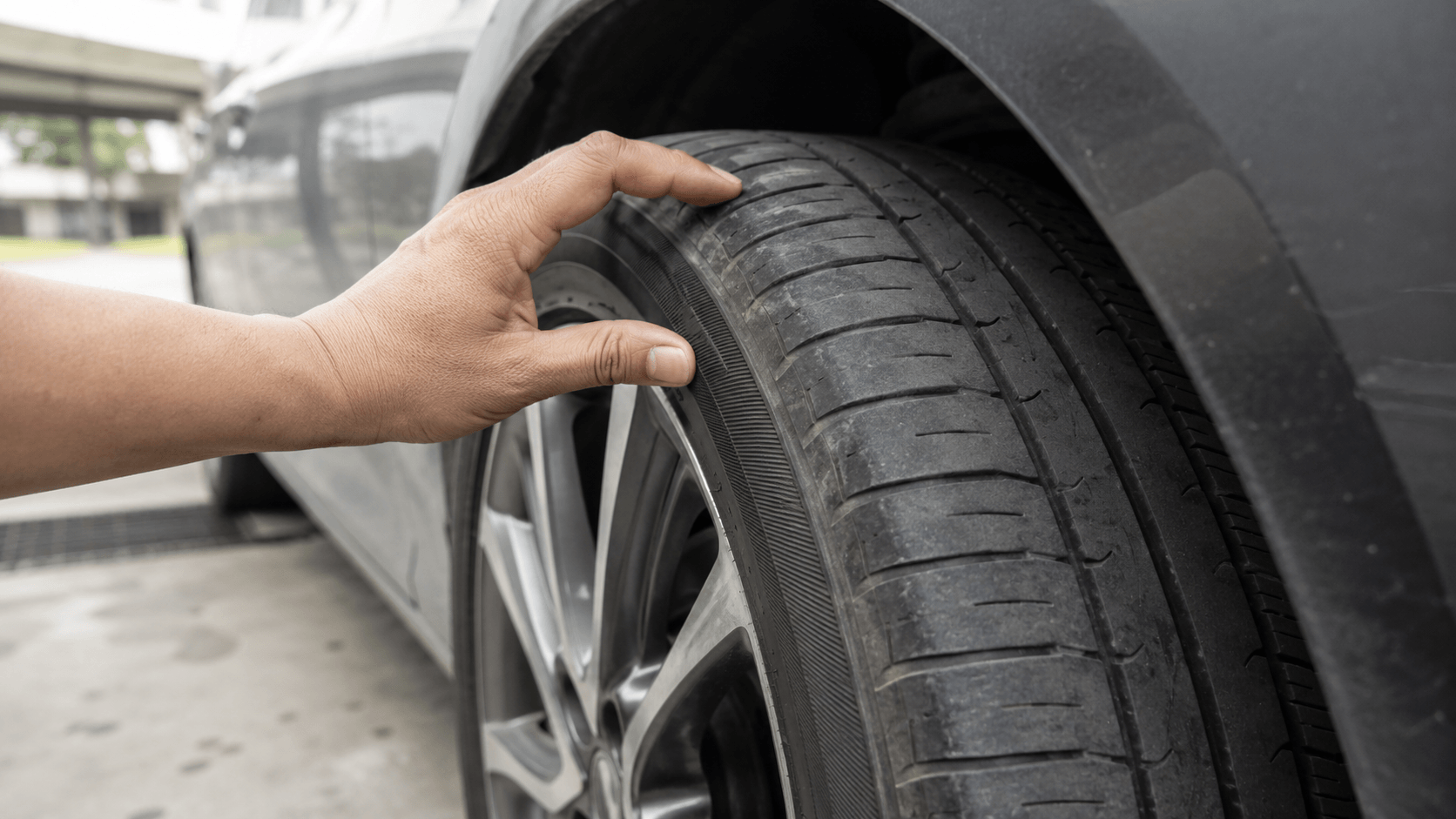
Most tyres have built-in tread wear indicators. These are small raised bars found inside the tread grooves. When the tread wears down to the same level as these bars, the tyre has reached its minimum usable depth and should be replaced.
For safety, do not wait until your tyres are completely bald. If your tread is already close to the wear indicators, start planning your tyre replacement soon.
Common Warning Signs That Your Tyres Need Replacing
Tyre replacement should not be delayed if you notice clear signs of wear, ageing or damage.
Here are the most important warning signs to look out for.
1. Tread Is Worn Down
If the tread has reached the wear indicators or looks shallow across the tyre surface, it is time to replace the tyre.
Worn tread reduces grip, particularly on wet roads. This can affect braking, cornering and stability during sudden rain.
For Malaysian drivers who often travel during heavy downpours or on highways, good tread depth is not just about comfort — it is a safety requirement.
2. Cracks on the Sidewall
Small cracks on the tyre sidewall can be a sign that the rubber is ageing.
This may happen when tyres are exposed to heat, sunlight or long periods of parking. While minor surface marks may not always mean immediate danger, visible cracking should never be ignored.
If you see cracks spreading across the sidewall or near the tread area, have the tyre inspected as soon as possible.
3. Bulges or Bubbles
A bulge on the tyre sidewall is a serious warning sign.
It usually means the internal structure of the tyre has been weakened. This can happen after hitting a pothole, kerb or road debris. A bulging tyre has a higher risk of sudden failure and should be replaced immediately.
Do not continue long-distance driving with a tyre that has a visible bulge.
4. Uneven Tyre Wear
Uneven wear can appear in different ways:
- More wear on one side
- Wear in the centre only
- Wear on both outer shoulders
- Patchy or cupped wear
- One tyre wearing much faster than the others
Uneven wear often points to another issue, such as incorrect tyre pressure, poor wheel alignment, worn suspension or unbalanced wheels.
Replacing the tyre may solve the immediate problem, but the underlying cause should also be checked. Otherwise, your new tyres may wear unevenly again.
5. Frequent Loss of Air Pressure
If one tyre keeps losing air even after inflation, do not ignore it.
The cause could be a small puncture, valve issue, rim leak or internal tyre damage. Driving with low pressure causes the tyre to flex more than it should, which generates heat and increases wear.
Underinflated tyres also affect fuel economy, handling and braking performance.
6. Vibration While Driving
A vibrating steering wheel or cabin may be caused by wheel imbalance, alignment issues, tyre damage or uneven wear.
If balancing or alignment does not solve the problem, the tyre itself may have internal damage. A professional inspection is recommended before the issue becomes more serious.
7. Poor Grip in the Rain
If your car feels unstable during rain, takes longer to stop, or feels like it is floating over water, your tyres may no longer be performing well.
Wet grip is especially important in Malaysia. Even tyres that appear acceptable in dry conditions may struggle when roads are wet.
If you notice a clear drop in wet-road confidence, check your tread depth, tyre pressure and tyre age.
Factors That Shorten Car Tyre Lifespan in Malaysia
Tyres wear naturally, but some conditions make them wear faster.
Hot Weather
Malaysia’s hot climate can increase tyre pressure during the day and accelerate rubber ageing over time. Tyres that are frequently exposed to direct sunlight may age faster than tyres kept under shade.
This is one reason why regular pressure checks and visual inspections are important.
Heavy Rain and Wet Roads
Wet roads do not directly shorten tyre lifespan in the same way rough roads do, but they expose weak tyres quickly.
A worn tyre may still feel acceptable on dry roads but become risky in heavy rain. Shallow tread makes it harder to channel water away, increasing the risk of aquaplaning.
Potholes and Uneven Roads
Hitting potholes, kerbs or rough road edges can damage the tyre structure. Even if there is no immediate puncture, the impact may cause sidewall bulges, internal damage or alignment problems.
Over time, these issues can reduce tyre life expectancy.
Incorrect Tyre Pressure
Tyre pressure has a direct effect on wear.
Underinflated tyres tend to wear more on the outer shoulders and generate more heat. Overinflated tyres tend to wear more in the centre and may reduce road contact.
Check your tyre pressure at least once a month, preferably when the tyres are cold. You can usually find the recommended pressure on the driver’s door frame sticker or in the owner’s manual.
Poor Wheel Alignment
If your wheels are not aligned correctly, your tyres may drag or scrub against the road at the wrong angle. This causes uneven and premature wear.
Signs of poor alignment include the car pulling to one side, uneven tread wear, or a steering wheel that does not sit straight when driving on a level road.
Aggressive Driving
Hard braking, fast cornering and quick acceleration can wear tyres faster. This is especially true for front tyres on front-wheel-drive cars, which already carry more steering and braking load.
Smooth driving helps extend tyre life and improves fuel efficiency.
Carrying Heavy Loads
Regularly carrying heavy loads can place extra stress on tyres. If the tyres are not inflated correctly for the load, they may overheat or wear faster.
This is particularly relevant for MPVs, SUVs, company cars, delivery vehicles and cars frequently used for balik kampung trips with passengers and luggage.
How to Extend the Lifespan of Your Car Tyres
Good tyre care can help your tyres last longer and perform more safely.
Check Tyre Pressure Monthly
Make tyre pressure checks part of your monthly routine.
For the most accurate reading, check when tyres are cold — ideally in the morning or after the car has been parked for a few hours. Avoid relying only on visual judgement, because a tyre can be underinflated without looking obviously flat.
Rotate Your Tyres Regularly
Tyre rotation helps even out wear between front and rear tyres.
For many cars, rotating tyres every 8,000 km to 10,000 km is a practical guideline. This is especially useful for front-wheel-drive vehicles, where the front tyres often wear faster.
Always follow your vehicle manufacturer’s recommendation, and ask a technician if your car uses directional tyres or staggered tyre sizes.
Check Wheel Alignment and Balancing
Alignment and balancing help your tyres wear evenly and keep the car stable.
You should consider checking alignment if:
- The car pulls to one side
- The steering wheel vibrates
- Tyres show uneven wear
- You recently hit a pothole or kerb
- You replaced suspension parts
Balancing is also important when fitting new tyres, repairing punctures or noticing vibration at certain speeds.
Inspect Tyres Before Long Trips
Before a long drive, especially during festive seasons or balik kampung travel, inspect your tyres carefully.
Check for:
- Low tread
- Cracks
- Bulges
- Nails or foreign objects
- Uneven wear
- Low pressure
- Spare tyre condition
A few minutes of checking can help prevent breakdowns or tyre-related emergencies on the highway.
Avoid Parking Under Direct Sunlight When Possible
Not everyone has covered parking, but reducing long-term sun exposure can help slow rubber ageing.
If your car is rarely used, try to move it occasionally. Long periods of parking in one position can create flat spots and accelerate ageing, especially if tyre pressure is low.
Choose Tyres That Match Your Driving Needs
Not all tyres are designed for the same purpose.
Some tyres prioritise comfort and low noise. Others focus on wet grip, fuel efficiency, durability or performance handling. Choosing the right tyre for your driving pattern can improve both safety and tyre life.
If you drive mainly in the city, comfort and fuel efficiency may matter more. If you often travel on highways, stability, wet grip and durability become more important.
You can compare available options by browsing car tyres in Malaysia or checking different tyre brands in Malaysia.
Tyre Lifespan Comparison: Mileage, Age and Condition
| Factor | What to Check | What It Means |
| Mileage | Kilometres travelled | Higher mileage usually means more tread wear |
| Age | DOT manufacturing date | Older tyres may harden or crack even with low mileage |
| Tread depth | Wear indicators or tread gauge | Low tread reduces wet grip and braking performance |
| Sidewall | Cracks, cuts or bulges | Damage or ageing may make the tyre unsafe |
| Pressure | Monthly cold pressure check | Incorrect pressure causes uneven wear |
| Alignment | Pulling, uneven wear or steering issues | Poor alignment shortens tyre lifespan |
| Driving style | Braking, cornering and acceleration habits | Aggressive driving wears tyres faster |
Should You Replace Two Tyres or All Four?
Ideally, replacing all four tyres gives the most balanced performance. However, many drivers replace tyres in pairs when only two are worn.
If you replace only two tyres, the new tyres are usually recommended for the rear axle. This helps reduce the risk of rear-end loss of grip, especially in wet conditions.
Avoid mixing tyres with very different tread patterns, sizes, speed ratings or wear levels unless advised by a professional. Mismatched tyres can affect braking, handling and stability.
If you are unsure, visit your nearest Tayaria outlet and ask a technician to inspect all four tyres before deciding.
When to Replace Your Spare Tyre
Many drivers forget about the spare tyre because it is rarely used.
However, spare tyres also age. Even if the tread looks new, the rubber may harden over time. Check the spare tyre’s DOT code, pressure and sidewall condition regularly.
This is especially important before long-distance travel. A spare tyre is only useful if it is properly inflated and safe to use.
Frequently Asked Questions About Car Tyre Lifespan
How long do car tyres last in Malaysia?
Car tyre lifespan depends on mileage, age, maintenance and driving conditions. Many tyres may last several years under normal use, but Malaysia’s heat, rain, potholes and traffic conditions can speed up wear. Regular inspection is the safest way to judge tyre condition.
Is tyre life expectancy based on mileage or age?
Both matter. Mileage affects tread wear, while age affects rubber condition. A high-mileage tyre may wear out quickly, but a low-mileage tyre can still become unsafe if it is old, cracked or hardened.
Should I replace tyres after 5 years?
Not always immediately, but tyres around 5 years old should be inspected more carefully. If there are cracks, poor grip, uneven wear or other warning signs, replacement may be needed even if the tread still looks usable.
Can tyres expire if they are not used?
Tyres do not expire like food, but rubber ages over time. A tyre that has never been used can still become unsuitable if it has been stored poorly or is too old.
What is the most obvious sign that I need tyre replacement?
The most obvious signs are tread worn down to the wear indicators, sidewall cracks, bulges, exposed cords, frequent air loss, vibration or poor wet grip. Any of these signs should be checked immediately.
Is it safe to buy older unused tyres?
It depends on the manufacturing date and storage condition. Always check the DOT code before buying. Avoid tyres that are too old, poorly stored, cracked or suspiciously cheap without a clear reason.
How can I make my tyres last longer?
Check tyre pressure monthly, rotate tyres regularly, maintain wheel alignment and balancing, avoid aggressive driving, inspect tyres before long trips and choose tyres suited to your vehicle and driving needs.
Conclusion: Tyre Lifespan Is About Safety, Not Just Mileage
Understanding car tyre lifespan helps you make safer and smarter tyre replacement decisions.
Do not rely on mileage alone. A tyre’s age, tread depth, sidewall condition, pressure history and driving performance all matter. In Malaysia, where roads can be hot, wet and uneven, regular tyre checks are especially important.
If your tyres are worn, cracked, ageing or no longer giving you confidence in the rain, do not wait until they become dangerous. Replacing them at the right time protects your car, your passengers and everyone else on the road.
Need help checking your tyres?
Visit your nearest Tayaria outlet or explore suitable replacement tyres at Tayaria.com. Our technicians can help you check tyre age, tread condition, pressure, alignment and the best replacement options for your car.